
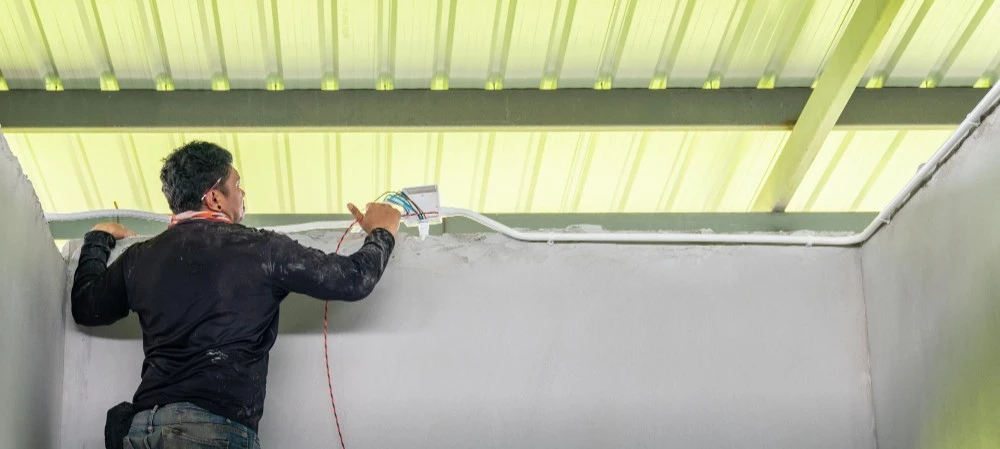
Intumescent Painting in Warwickshire
Enquire NowAt Industrial Spray Painters, we provide specialist intumescent painting in Warwickshire CV9 1 for steel structures, beams, and industrial frameworks that require passive fire protection to comply with UK building regulations and safety standards.
Since structural steel loses its integrity rapidly when exposed to high temperatures, intumescent coatings expand in a fire to form a protective char barrier that insulates the material underneath.
This allows critical time for evacuation and emergency response, helping prevent collapse during fire exposure.
We apply fire-rated intumescent coatings in Warwickshire for both new builds and retrofit projects, ensuring your structure meets legal requirements while maintaining a professional appearance.
What Is Intumescent Painting?
Intumescent painting refers to the application of a specialist fire-resistant coating that reacts to heat by swelling and forming an insulating char layer.
Industrial Spray Painters in Warwickshire apply intumescent coatings to steelwork using airless spray systems for uniform coverage and efficient application across large surface areas.
These coatings are typically applied as part of a passive fire protection strategy and are rated for 30, 60, 90, or 120 minutes of fire resistance depending on specification.
The paint remains thin and decorative in normal conditions, allowing architectural finishes to remain visible.
What Surfaces Can Be Protected With Intumescent Coating?
We apply intumescent paint in Warwickshire to structural steel, metal columns, beams, and frameworks within commercial buildings, industrial facilities, warehouses, and public infrastructure.
The coatings are designed for internal structural steel but may also be used in sheltered external areas with the appropriate topcoat.
We also provide decorative top seals that preserve the finish and protect the coating from damage, moisture, and UV exposure where necessary.
Intumescent painting is suitable for exposed structural elements in both new developments and refurbishment projects.
How Does Intumescent Paint Work in a Fire?
In a fire, the intumescent paint reacts to temperatures above approximately 200°C, causing the material to swell up to 50 times its original thickness.
This expanded layer forms a dense, carbon-rich foam (char) that acts as a thermal barrier between the flames and the steel.
The char delays the temperature rise of the steel, keeping it below critical failure levels for the required fire resistance duration.
This additional time helps building occupants evacuate safely and gives emergency responders more time to act.
How Much Does Intumescent Painting Cost in Warwickshire?
The cost of intumescent painting in Warwickshire typically ranges from £20 to £45 per square metre, depending on the steel size, fire protection rating required, access, and whether topcoats or primers are also applied.
For standard steel sections requiring 60-minute protection, most commercial projects fall within the £25 to £35 per m² range.
Projects involving higher ratings (90–120 minutes) or complex geometries may increase due to thicker application requirements and extended curing times.
We provide fixed, itemised quotations based on structural drawings or on-site surveys.
What Are the Benefits of Intumescent Painting?
Intumescent painting offers essential fire protection while preserving the aesthetic and structural integrity of buildings.
Key benefits include:
Fire resistance ratings from 30 to 120 minutes, compliant with UK building regulations
Thin film finish that does not alter the visual profile of steel
Cost-effective compared to cladding or cementitious fireproofing systems
Compatible with decorative topcoats in a variety of finishes
Applied by spray for speed and uniformity across complex surfaces
Suitable for new builds, retrofits, and exposed internal frameworks
Enhances safety, reduces risk, and supports insurance compliance
Since these coatings act as a passive barrier, they do not require activation and remain effective throughout the building’s life with proper maintenance.
Do You Provide Certification and Fire Protection Compliance?
Industrial Spray Painters in Warwickshire issue full certification on completion of every intumescent project, including material data, application records, and dry film thickness (DFT) readings.
Our team ensures all coatings are applied in accordance with manufacturer specifications and project fire strategy documents.
We provide fire protection certification as required by building control, insurers, and architects, ensuring full regulatory compliance.
This guarantees that your fire safety measures are fully documented and verifiable.
Can You Apply Intumescent Paint to Existing Steel?
We can apply intumescent paint to existing structural steel in retrofit or renovation projects, provided the steel is properly prepared.
Industrial Spray Painters in Warwickshire inspect and clean the steel surface to remove rust, loose paint, and contaminants before applying a compatible primer.
We then apply the required number of intumescent coats to meet the specified fire resistance rating.
This process allows older buildings to be brought up to modern safety standards without replacing structural elements.
What’s the Difference Between Intumescent and Fire-Retardant Paint?
Intumescent paint expands to form a thermal barrier that protects structural materials in a fire, whereas fire-retardant paint slows down flame spread on surfaces like wood or walls.
Intumescent coatings are typically used on structural steel, while fire-retardant coatings may be used on surfaces like timber, plasterboard, or ceilings to limit ignition or flame propagation.
Spray application of intumescent paint in Warwickshire is therefore focused on passive structural fire protection, rather than surface fire resistance.
How Is Intumescent Paint Applied on Site?
Intumescent paint is applied on site using professional airless spray equipment to ensure consistent thickness and full coverage of structural steel surfaces.
Before painting begins, Industrial Spray Painters in Warwickshire clean and prepare the steel by removing dust, rust, or previous coatings that may affect adhesion.
A compatible primer is then applied if required, followed by one or more layers of intumescent coating, depending on the fire resistance rating.
As curing time and thickness must meet strict guidelines, our team uses digital film gauges to verify that the dry film thickness (DFT) complies with manufacturer and building regulation standards.
What Is Dry Film Thickness and Why Is It Important?
Dry film thickness (DFT) refers to the final measured thickness of the intumescent coating once it has dried and cured on the surface.
DFT is a critical factor in achieving the correct fire resistance rating because it directly affects how long the steel will be protected during a fire.
Industrial Spray Painters in Warwickshire use electronic gauges to take DFT readings after application and log them as part of the certification process.
If the thickness is below specification, additional coats are applied to meet compliance before final sign-off.
Can Intumescent Paint Be Used in External Environments?
Intumescent paint is primarily formulated for internal use, but it can be used externally when protected by a suitable weather-resistant topcoat.
Industrial Spray Painters in Warwickshire apply intumescent systems in semi-exposed or external settings only if the full coating system, including primer, intumescent layer, and top seal, meets outdoor durability standards.
Since external exposure can cause premature breakdown if unprotected, the use of a compatible and approved topcoat is essential to preserve fire resistance over time.
What Is the Difference Between Cellulosic and Hydrocarbon Intumescent Coatings?
Cellulosic intumescent coatings are designed for buildings and environments where the fire risk comes from materials like wood, paper, or textiles, which burn at lower temperatures.
Hydrocarbon intumescent coatings are engineered for industrial environments such as oil, gas, or chemical plants where fires reach much higher temperatures and intensities.
Industrial Spray Painters in Warwickshire use cellulosic coatings for standard commercial and residential buildings, while hydrocarbon-rated systems are used in high-risk industrial sectors that require enhanced protection and different testing standards.
Do I Need Intumescent Painting for Building Regulations Approval?
Many steel-framed buildings in the UK require intumescent painting to comply with fire safety standards and obtain building regulations approval.
The required fire resistance rating (e.g., 30, 60, 90, or 120 minutes) is typically outlined in the building's fire strategy report.
Industrial Spray Painters in Warwickshire ensure all coatings are applied to match the required performance level, and provide full documentation including fire certification, DFT records, and manufacturer specifications.
This documentation is essential for inspection sign-off and insurance validation.
Request a Free Quote for Intumescent Painting in Warwickshire
Whether you are constructing a new facility or upgrading an existing structure, Industrial Spray Painters in Warwickshire CV9 1 deliver certified, compliant, and professional intumescent painting services tailored to your fire protection needs.
We work with developers, contractors, architects, and commercial property owners to ensure safe, code-compliant finishes across steel structures and industrial frameworks.
Request a free site assessment and quote today, and protect your building with professional intumescent painting in Warwickshire.
We cover Warwickshire